
Dylan Gauthier
Paw Paw Study
Paw Paw Study (2026) is a performance and sculptural installation by artist and ecologist Dylan Gauthier. The work centers on the charismatic yet widely unknown figure of the paw paw, the largest edible fruit indigenous to North America. Once popularized as the "poor man's banana" it has since receded from view, in part because its delicate fruit and short ripening season make it a hard fit for an industrialized and globalized food system. As one New York Times writer put it "If there were such a thing as an anticapitalist fruit, the pawpaw, commonly foraged in the wild and inherently resistant to commodification, might qualify." Street trees, both those officially stewarded by the city and designated in its online tree atlas, and those less formally planted and almost magically maintained by residents, do quiet ecological work, cooling pavement with shade, and holding carbon in the soil. Paw paw groves are shady and cool spaces, perfectly suited to New York City's subtropical humid climate zone. Gauthier treats the planting of a street paw paw as a performance of care, maintenance and reciprocity. To flourish, the tree must be convinced to take root in the ground of a street tree pit and neighbors must be convinced to help it survive its first fragile seasons.
During the Fallow Frames Biennial weekend, Gauthier will also distribute a small-edition Risograph zine that reveals a distributed grove of the trees across the city, inviting us to gather fruit and help tend the grove through slow years as we establish an urban forest that catches up with New York as a newly realized subtropical biome.
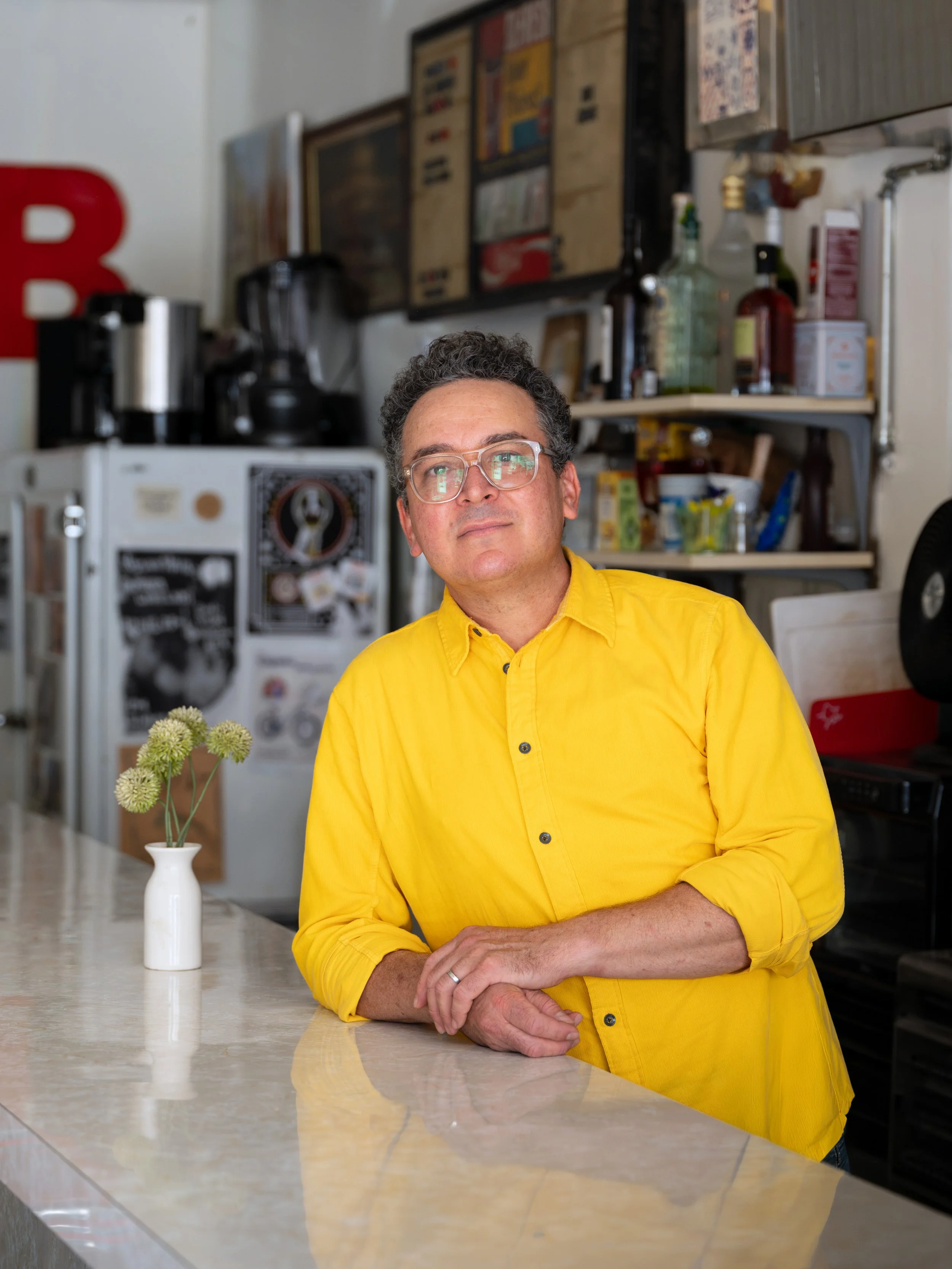
Dylan Gauthier (he/him) is an artist, curator, educator, and researcher whose work explores the intersections of natural and cultural systems through collaborative, place-based practice. Working across sculpture, sound, performance, writing, video, walking, and public engagement, he develops long-term projects that investigate how communities adapt to environmental, social, and political change. His practice brings together artists, scientists, local knowledge holders, and civic partners to create spaces for collective inquiry, emphasizing listening, field research, and shared stewardship as tools for imagining more resilient futures. Gauthier’s collective and solo work has been presented at the Centre Pompidou, Walker Art Center, Parrish Art Museum, Brandywine Museum of Art, and Harvard University, among other venues. He is co-founder of Mare Liberum, the cooperative arts space Sunview Luncheonette, and Freshkills Field R/D, an artist-research residency. His work seeks to cultivate forms of reciprocity that reconnect people with the ecologies, histories, and futures of the places they inhabit.

Fallow Frames Biennial 2026
September 19 — 20 2026
Ridgewood, Queens NY
1pm — 6pm
20 Empty Tree Beds - 24 Participating Artists
Ridgewood's sidewalks contain more than 800 empty street tree beds, roughly one for every 90 residents. For one weekend, twenty of these overlooked spaces will be transformed into temporary, site-specific artworks by 23 participating artists.
Visitors are invited to explore the neighborhood on foot, discovering how contemporary art can temporarily transform familiar streets while reflecting on public space, urban ecology, and the hidden potential of the city's overlooked landscape.